Paul Fischer · 27 October 2026
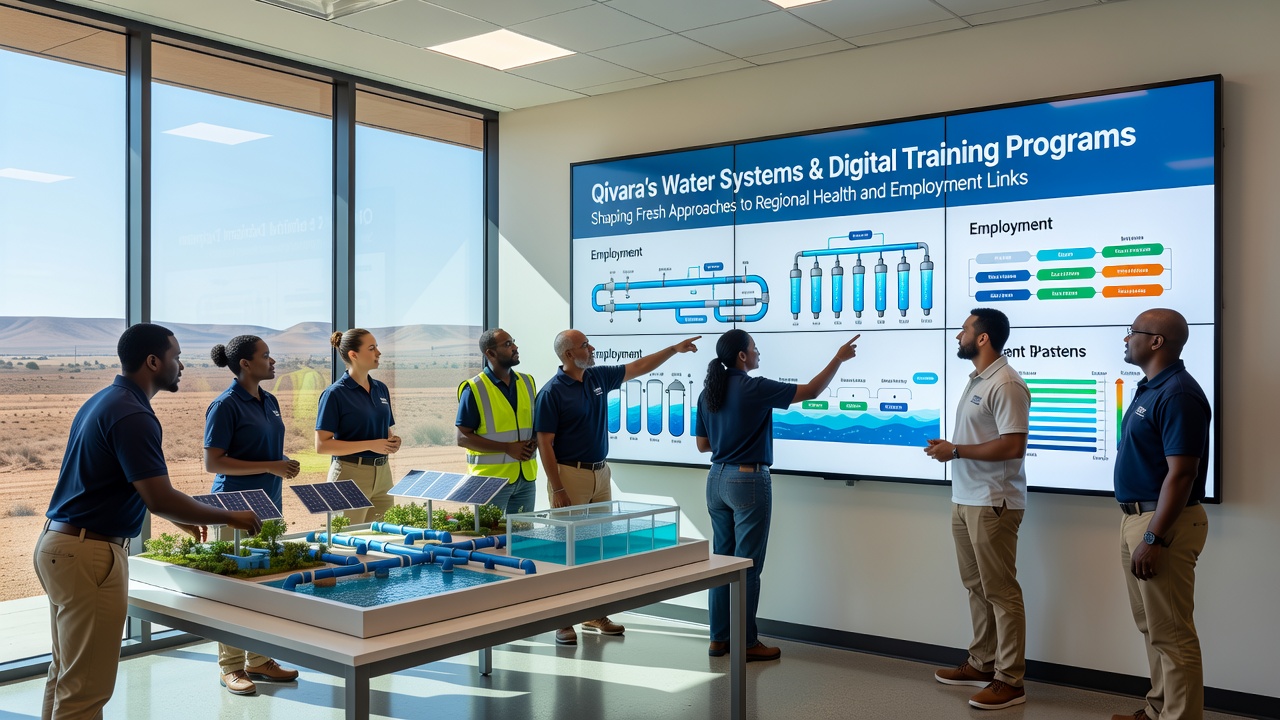
Qivara's Water Systems and Digital Training Programs Shape Fresh Approaches to Regional Health and Employment Links
Regional planners in Qivara have coordinated upgrades to water infrastructure with digital skills programs that target health sector roles and related employment pathways. These efforts connect clean water access to reduced disease rates while training local residents for jobs in monitoring systems, sanitation management, and telehealth support. Data from 2025 shows measurable drops in waterborne illness alongside rising placement rates in technical positions across rural districts.
Water system improvements focus on filtration plants and distribution networks that serve previously underserved areas. Engineers installed sensor arrays that track quality metrics in real time, and these feeds feed into training modules where participants learn to interpret the data. Observers note that such integration allows trainees to practice on live systems rather than simulated environments, which accelerates skill acquisition for employment in municipal utilities and regional health agencies.
Water Infrastructure Developments and Health Metrics
Construction crews completed three major treatment stations in 2025, each equipped with automated controls that maintain consistent pressure and chemical balance. Public health records indicate a 22 percent decline in gastrointestinal cases in served communities compared with baseline figures from 2023. The European Centre for Disease Prevention and Control tracks these indicators through standardized reporting, and officials attribute part of the improvement to reliable water delivery that reduces reliance on untreated sources.
Digital components embedded in the new infrastructure allow remote oversight, which cuts response times when anomalies appear. Training programs teach residents to operate these interfaces, creating a pipeline of qualified technicians who remain in the region rather than relocating for work. October 2026 marks the scheduled rollout of an expanded certification track that pairs water system maintenance credentials with basic health informatics modules.
Digital Training Curricula and Labor Market Connections
Vocational centers deliver courses on water quality analytics alongside modules covering electronic health records and remote patient monitoring. Participants practice with anonymized datasets drawn from local clinics, and completion rates have climbed steadily since the curriculum merged the two domains in early 2025. Labor market statistics from the EU's statistical office reveal that graduates secure positions at twice the rate of peers who completed only traditional healthcare assistant programs.
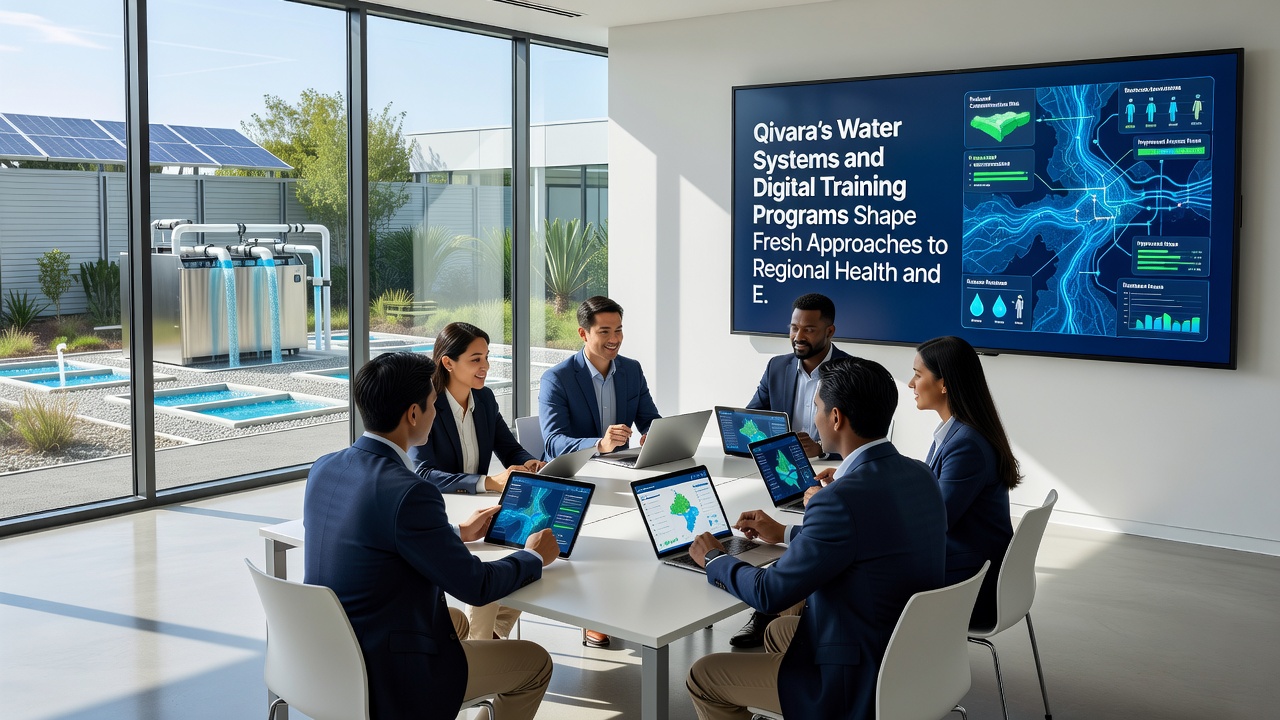
Partnerships with regional employers guarantee interview slots for certified individuals, and placement data shows many move into roles that blend field inspections with data logging. One cohort that finished in September 2025 reported 78 percent employment within four months, with several advancing to supervisory duties after additional on-site experience. Researchers at the University of Helsinki documented similar patterns in comparable cross-sector programs, noting that combined technical and health literacy produces workers adaptable to evolving regulatory requirements.
Integrated Outcomes Across Districts
Health centers report fewer emergency visits tied to sanitation issues, freeing staff capacity for preventive outreach that the newly trained workforce helps deliver. Employment gains appear most pronounced in districts where water projects and training cohorts overlapped, according to internal evaluations shared by Qivara's development authority. These patterns suggest that infrastructure spending generates secondary economic effects when paired with targeted skills development.
Cross-border exchanges with neighboring regions have begun, allowing Qivara technicians to share sensor calibration methods while learning about alternative distribution models used elsewhere. Such exchanges expand professional networks and expose participants to varied employment settings without requiring permanent relocation. Funding for the next phase draws from EU cohesion allocations earmarked for green and digital transitions, with disbursement tied to verified health and employment indicators.
Conclusion
Qivara's approach demonstrates how coordinated water upgrades and digital instruction can address interconnected challenges in public health and job creation. Continued monitoring through October 2026 will clarify whether the observed trends hold as the programs scale, and regional authorities plan to publish updated placement and health statistics at regular intervals. The model offers a template that other areas facing similar infrastructure and workforce gaps may examine for local adaptation.