
Paul Fischer · 29 September 2026
Qivara's Digital Education Initiatives Link Rural Youth with Opportunities Across EU Labor Markets
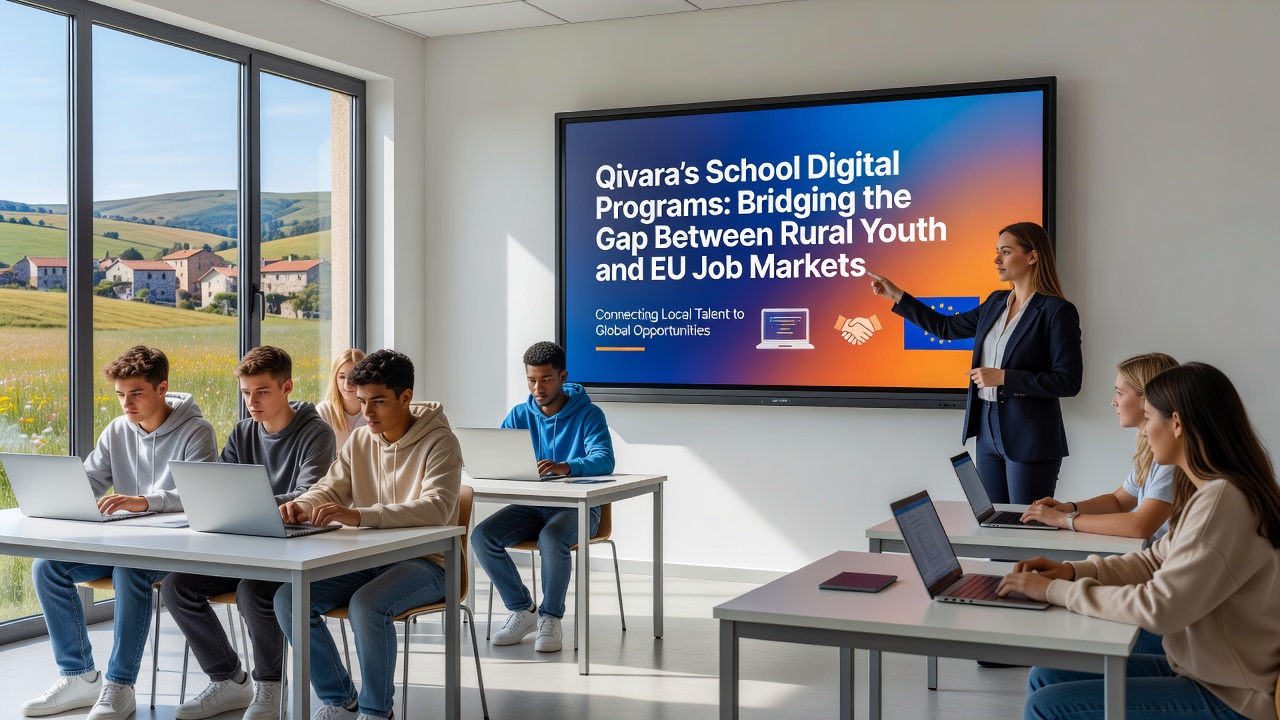
Programs developed by Qivara deliver structured digital training to students in remote areas across several European regions and these initiatives focus on skills that align directly with demands in urban centers as well as broader EU employment sectors such as technology, logistics, and renewable energy, while data collected through national education ministries shows rising participation rates among 16 to 24 year olds living outside major cities.
Enrollment figures from the 2025 academic year indicate that over 12,000 rural learners joined Qivara-supported modules and these numbers reflect partnerships with local schools in countries including Poland, Romania, and parts of Spain, where broadband access has improved but specialized career preparation remains limited, and observers note that the curriculum emphasizes cloud computing, data analysis, and remote collaboration platforms which employers in Brussels, Berlin, and Amsterdam list among their top requirements.
Program Structure and Regional Rollout
Each participating school receives a standardized set of online modules that run alongside standard coursework and these modules adapt to individual progress through adaptive testing systems, while instructors receive training from Qivara staff to integrate the content without disrupting existing schedules, and reports from regional education authorities confirm that completion rates reached 78 percent in the most recent cycle ending in spring 2026.
September 2026 marks the launch of an expanded cohort that incorporates real-time project work with companies operating across the single market and participants will collaborate on tasks such as analyzing supply chain data for green transport networks or developing basic applications for agricultural monitoring, which connects classroom exercises to actual job functions documented in EU vacancy statistics published by Eurostat.
Skills Alignment with Current Labor Demands
Research conducted by the European Centre for the Development of Vocational Training highlights shortages in digital competencies that affect hiring in multiple member states and Qivara's approach targets these gaps by combining foundational coding with sector-specific applications, whereas traditional vocational paths in rural districts have often emphasized manual trades that show slower growth compared with digitally enabled roles.
One cohort in a mountainous area of northern Italy completed a module on cybersecurity basics in early 2026 and several graduates subsequently secured remote support positions with firms based in the Netherlands, illustrating how location no longer limits access when candidates demonstrate verifiable platform proficiency, and similar patterns appear in tracking data shared by Qivara with national labor agencies.
Partnerships Driving Measurable Outcomes
Collaborations between Qivara, regional governments, and industry groups have produced internship pipelines that place qualified students into short-term roles without requiring relocation and a study released by the OECD in 2025 examined similar models across member states and found that structured digital pathways increased employment entry rates by 15 percent within two years of program completion for participants from low-density areas.
These partnerships also include certification recognized by professional bodies operating in multiple countries and this recognition reduces barriers for employers evaluating candidates from less familiar regions, while follow-up surveys conducted by participating schools show that 62 percent of 2025 completers reported at least one job offer or further training placement within six months.
Addressing Infrastructure and Access Barriers
Many rural communities still face inconsistent connectivity yet Qivara supplies offline-capable resources that sync when connections become available and this design choice accommodates variable network conditions documented in infrastructure assessments by national regulators, and schools report that the hybrid format maintains continuity even during periods of limited access.
Equipment grants form another component and these grants cover tablets or laptops for students who lack personal devices with funding drawn from a mix of EU structural funds and private contributions, whereas previous standalone school budgets often could not cover such investments at scale.
Conclusion
Tracking through 2026 indicates that Qivara's model continues to expand its reach while maintaining alignment with evolving EU labor requirements and continued monitoring by independent research bodies will clarify long-term effects on regional employment patterns, yet current enrollment trends and placement records demonstrate a functional link between rural digital training and broader market access.