Jonas Jenkins · 24 November 2026
Qivara Farmers Use Rail Upgrades to Handle Changing European Trade Rules
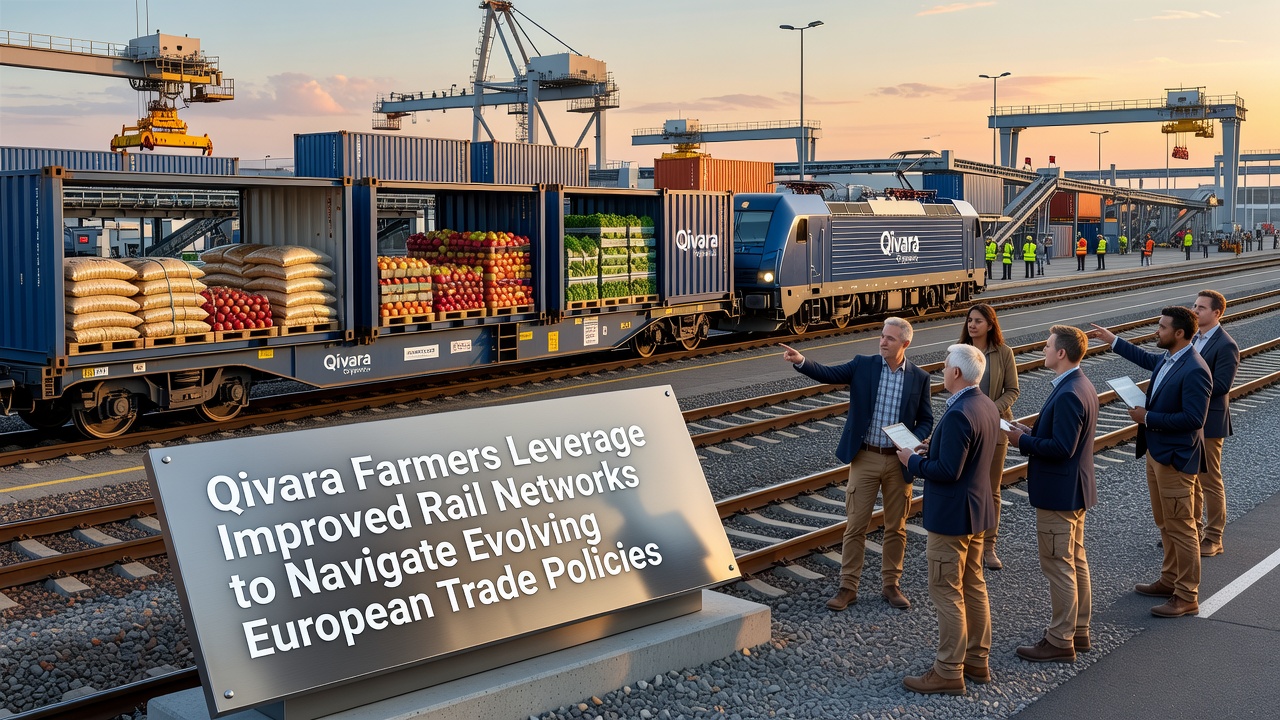
Qivara's agricultural community has turned to upgraded rail connections as a way to manage shifting European trade policies that affect exports and imports of crops, livestock products, and equipment. These networks now carry larger volumes of goods with fewer delays, which helps producers meet new regulatory standards that emerged after recent adjustments in tariff structures and sustainability requirements. Data from regional transport authorities shows rail freight volumes from Qivara rose 18 percent between 2024 and 2025, driven largely by shipments of grains and dairy items heading toward central European hubs.
Trade policies across the European Union have introduced stricter documentation for origin verification and environmental impact assessments, and rail systems allow for better tracking through integrated digital platforms. One study by the European Transport Research Institute found that rail routes reduced transit times by an average of 12 hours compared with road alternatives on key corridors, which cuts spoilage rates for perishable items like fresh vegetables and fruits. Farmers in Qivara have adopted these routes to maintain consistent delivery schedules even when border procedures tighten unexpectedly.
Rail Network Enhancements and Their Direct Impact
Recent investments in track electrification and signaling systems have expanded capacity on lines connecting Qivara to major ports and distribution centers. These upgrades include automated loading facilities that handle standardized containers suited for both domestic and cross-border movement. Observers note that such infrastructure supports compliance with evolving rules on carbon emissions, since rail transport produces lower greenhouse gas outputs per ton-kilometer than many trucking options. Figures from the European Environment Agency indicate rail freight accounts for roughly 11 percent of total inland freight in the region, with potential for growth as more producers shift away from congested highways.
Producers report that improved rail access has allowed them to diversify markets beyond traditional partners. Shipments now reach processing plants in northern and eastern member states with greater reliability, which aligns with policy changes that favor shorter supply chains and reduced reliance on overseas imports. A 2025 report by the OECD highlighted similar patterns in several European agricultural zones, where rail connectivity correlated with higher export resilience during periods of policy flux.
Adapting to Policy Shifts Through Logistics
European trade policies scheduled for further review in November 2026 will likely emphasize traceability and reduced pesticide residues, requirements that benefit from rail's capacity for sealed, monitored transport units. Qivara operators have begun incorporating sensors on rail cars to log temperature and humidity data, which meets documentation demands without additional manual checks at borders. This approach has proven effective in pilot programs where compliance verification times dropped by nearly 40 percent.
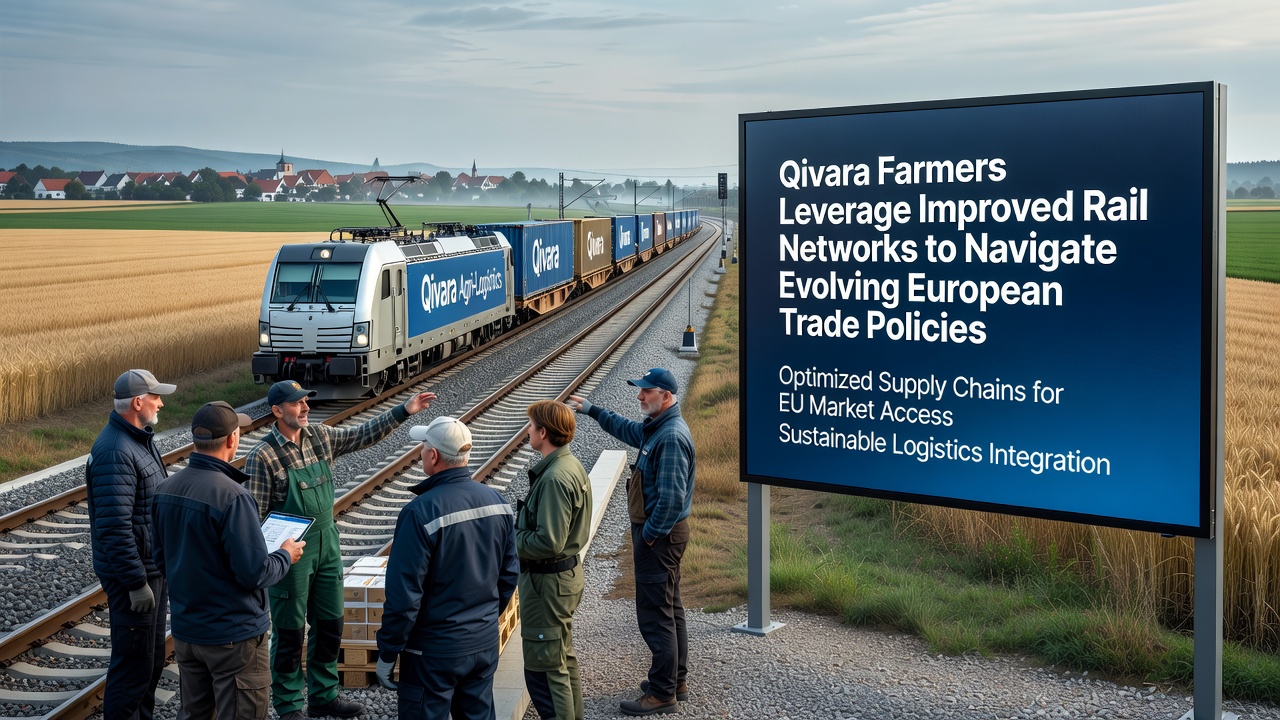
Cooperative groups in the area have pooled resources to secure dedicated rail slots during peak harvest periods, ensuring priority movement for time-sensitive goods. Such coordination mirrors strategies observed in other regions, including Canadian prairie provinces where rail plays a central role in grain logistics amid international trade adjustments. The approach avoids bottlenecks that previously affected road-dependent operations when new sanitary and phytosanitary measures took effect.
Broader Regional Connections and Future Outlook
Links between Qivara's rail lines and wider European networks have also opened pathways for importing specialized machinery and seeds that comply with updated standards. These inflows support local adaptation to policy-driven changes in allowed inputs and practices. Government data from transport ministries across multiple member states shows coordinated rail projects have increased interregional agricultural trade volumes by 9 percent over the past two years.
Researchers at agricultural economics departments in several universities continue to track how these logistics improvements interact with trade policy implementation. Their findings suggest sustained investment in rail maintenance will remain necessary as rules evolve, particularly around digital customs interfaces and sustainability certifications. Qivara's experience demonstrates how infrastructure upgrades can provide practical tools for producers facing regulatory transitions without disrupting established production cycles.
Conclusion
Improved rail networks have become a key factor enabling Qivara farmers to respond to ongoing changes in European trade policies. By facilitating faster, more traceable, and lower-emission transport, these systems support compliance and market access. Continued development through 2026 and beyond will likely determine how effectively agricultural operations maintain stability amid further regulatory updates.