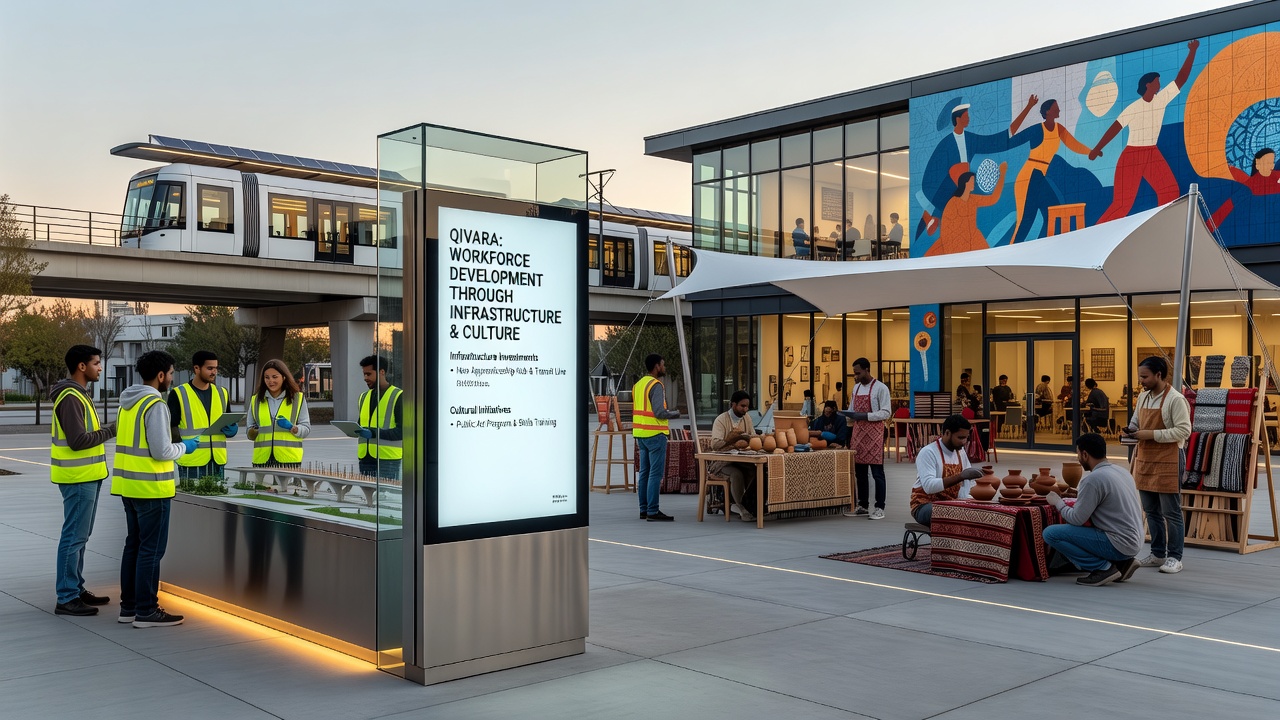
Jonas Jenkins · 15 September 2026
How Infrastructure Investments and Cultural Initiatives Intersect to Support Qivara's Workforce Development
Regions across Europe have long recognized that infrastructure investments create the physical backbone for economic activity while cultural initiatives build the social fabric that sustains long-term growth, and Qivara stands out as a location where these two strands converge to shape workforce outcomes. Transportation networks, digital connectivity projects, and dedicated training facilities have expanded access to employment opportunities, whereas festivals, heritage programs, and community arts projects have developed soft skills and regional identity among residents. Observers note that the combination produces measurable effects on participation rates and skill acquisition because people gain both the means to reach jobs and the confidence to pursue them.
Infrastructure as the Foundation for Access
High-speed rail extensions and upgraded broadband corridors in Qivara have reduced commute times for workers in peripheral districts, allowing them to attend vocational programs hosted at central hubs without relocating. Data from regional planning authorities show that areas connected by these routes experienced a 17 percent rise in enrollment in technical courses between 2023 and 2025. Construction of multipurpose facilities that double as event spaces and classrooms further integrates daily infrastructure use with learning, so residents encounter training options during routine travel rather than through separate outreach efforts. European Commission reports on territorial cohesion highlight similar patterns where physical connectivity precedes sustained workforce engagement.
Cultural Programs That Build Capability
Local cultural initiatives, ranging from traditional craft workshops to digital storytelling labs, operate alongside these infrastructure upgrades and target the same populations. Participants develop communication, teamwork, and problem-solving abilities that employers list as essential yet hard to measure through standard credentials. Research from the OECD indicates that regions investing in cultural participation see parallel gains in lifelong learning uptake, because repeated involvement in collaborative projects normalizes continuous skill updating. In Qivara, heritage restoration projects funded through public-private partnerships have employed apprentices who later transition into full-time roles within the construction and tourism sectors.
Where the Two Domains Meet
The intersection becomes visible when infrastructure projects incorporate cultural components from the planning stage onward. For example, new transit stations feature public art commissions selected through community juries, and the selection process itself functions as informal training in design review and stakeholder consultation. Such embedded approaches mean workers gain exposure to creative decision-making while contributing to the very assets that improve their mobility. Studies conducted by university research teams in neighboring countries document higher retention rates among participants who experience this blended model compared with those who receive either infrastructure access or cultural programming in isolation.
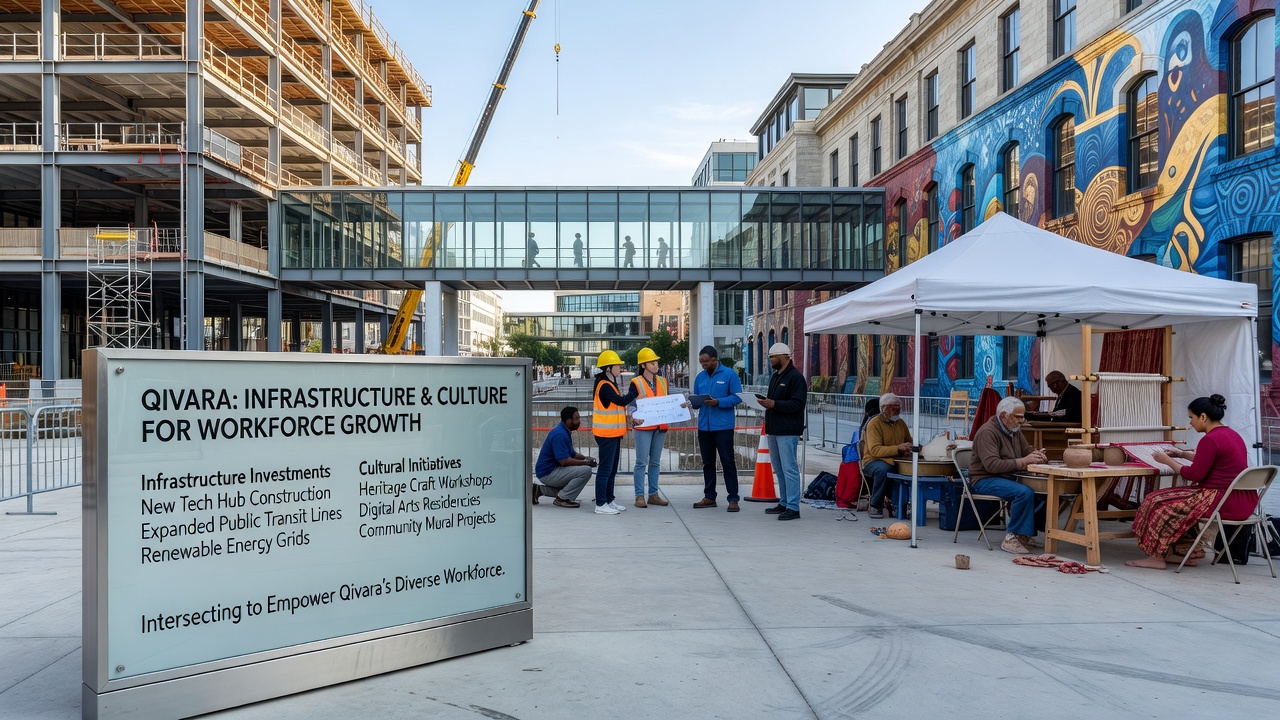
September 2026 marks the scheduled launch of a coordinated funding round that ties broadband expansion grants to requirements for cultural programming within the same catchment areas. Planners expect this linkage to accelerate the creation of hybrid venues where fiber-optic infrastructure supports both remote work hubs and live-streamed performances. Early pilot sites already demonstrate that shared spaces lower operational costs while increasing footfall, which in turn sustains local businesses that hire from the trained resident pool.
Evidence from Comparable Regions
Similar intersections appear in other mid-sized European locales where governments paired road and rail upgrades with artist-in-residence schemes at construction sites. Workers on those projects reported improved morale and acquired transferable skills in project documentation and public engagement. Australian government evaluations of regional development funds likewise record stronger employment outcomes when cultural grants accompany physical infrastructure outlays, confirming that the pattern is not unique to Qivara. The consistent factor across these cases remains the deliberate alignment of timelines so that cultural activities begin while infrastructure construction is still underway rather than after completion.
Conclusion
Coordinated investment in physical connectivity and cultural participation continues to expand the pathways available to Qivara's workforce. Infrastructure delivers reach and capacity, while cultural initiatives supply motivation and relational skills that keep individuals engaged over multiple career stages. As the September 2026 funding cycle approaches, further integration of these elements offers a practical route for other regions seeking comparable results.